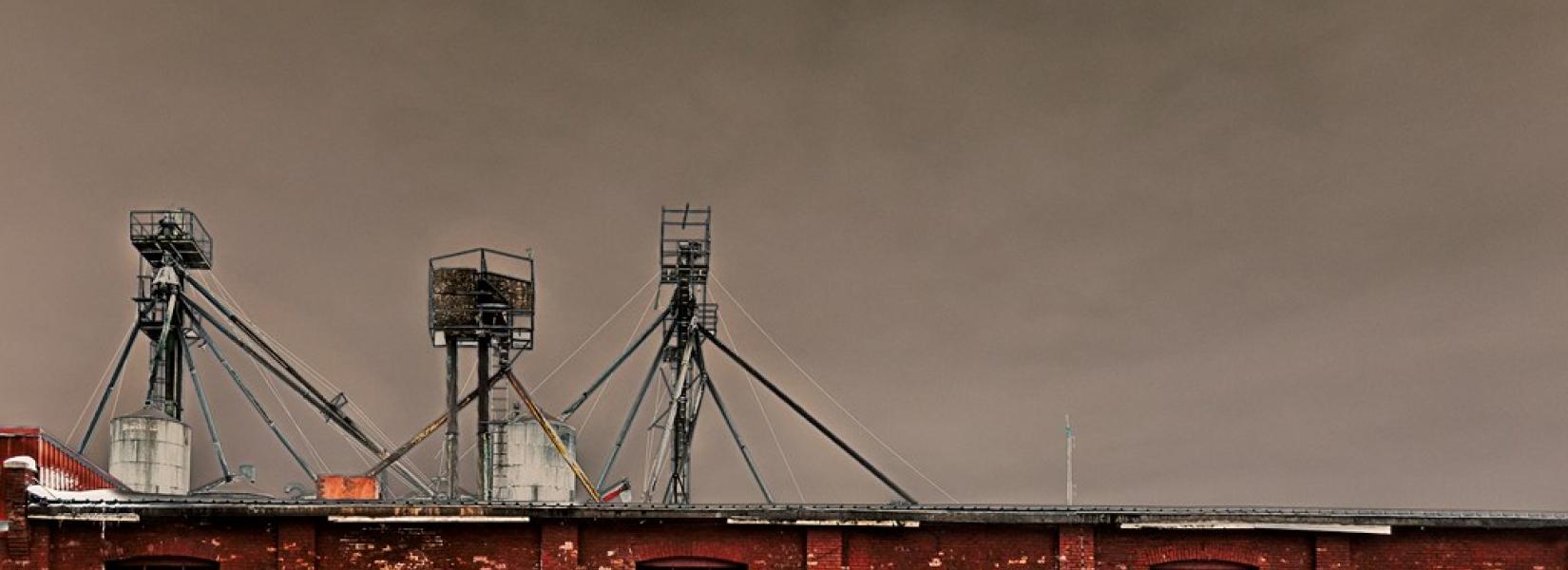
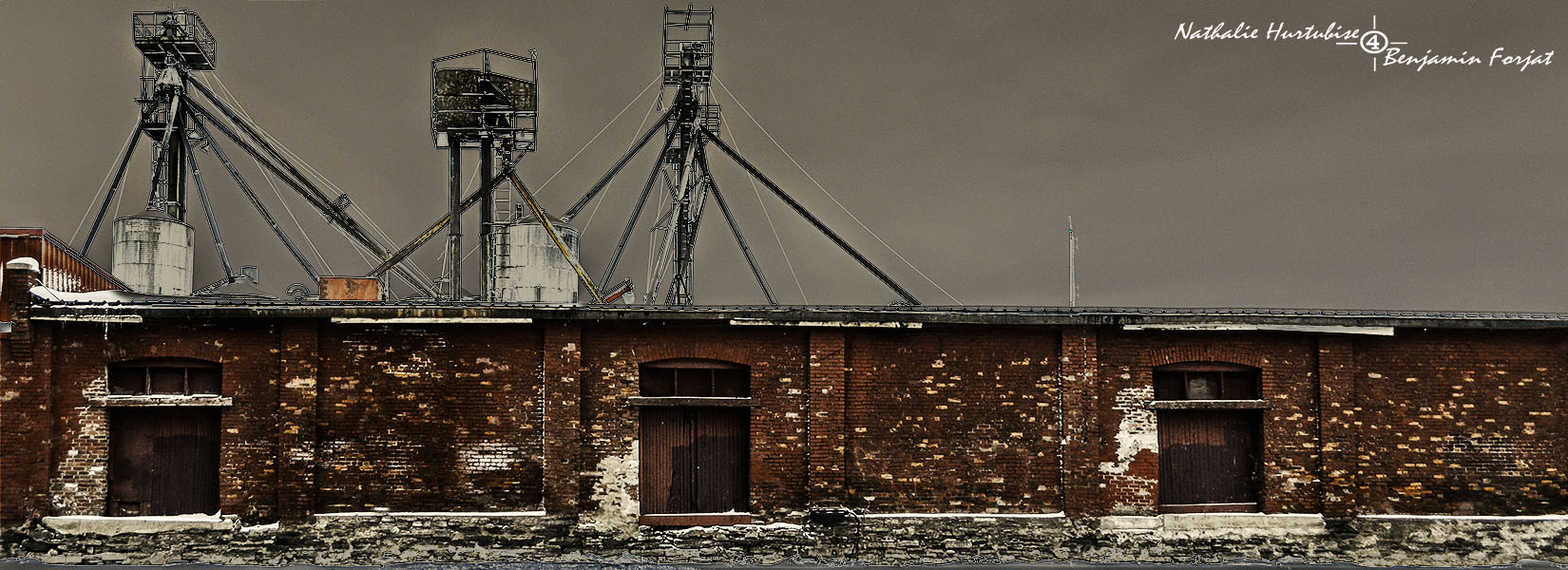
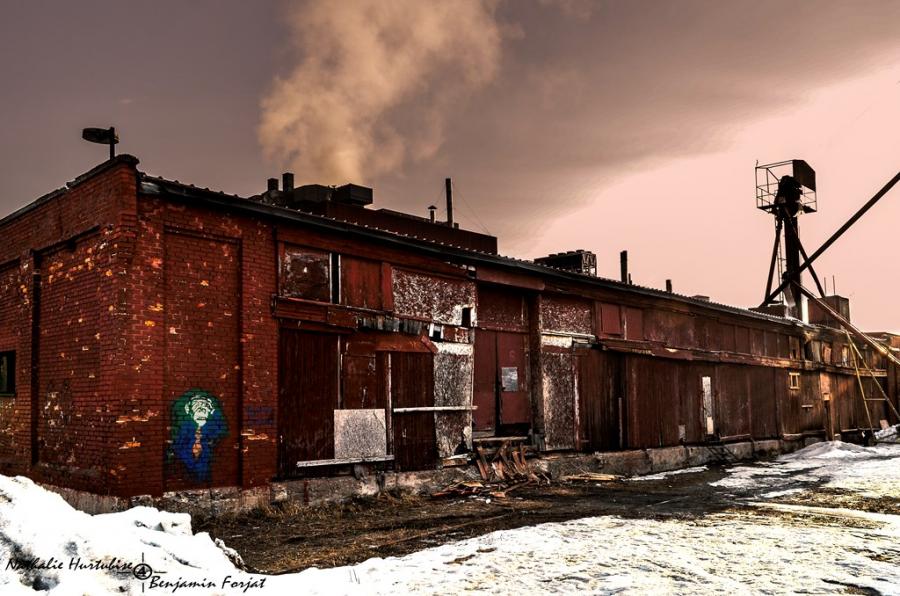
The plant itself is definitively not as great at we saw in other places. Located in the heart of Pointe-Saint-Charles neighborhood of Montreal, this two storey building has no longer the cachet of its heyday. While neighboring buildings are...

Urban and rural photographic exploration
Canadian Pacific Railway Freight Office
Trains and Grain
Montréal (Quebec), Canada
Hochelaga-Maisonneuve has been deeply marked by the train, in its development. Even today, it is surrounded by three tracks : the Canadian Pacific to the west, the now abandoned Canadian National to the east and the one of the port of Montreal to the south.
For the longest part of the 20th century, it was also bordered to the north by the «shop Angus», a vast industrial complex occupying 40 acres of land as well as the «Montreal Locomotive Works», a provider of the CPR, to the east, both now vanished.
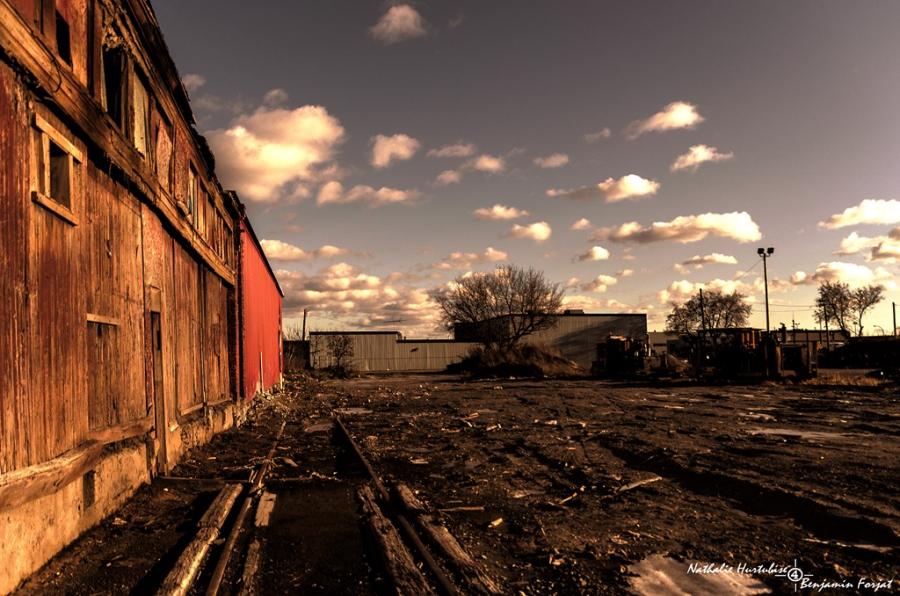
The line of the Canadian Pacific Railway (CPR) to the west of the district is the first railway to arrive in Hochelaga-Maisonneuve. It was built in 1876 by a company created by the Government of Quebec, Quebec, Montreal, Ottawa and Occidental Railway (QMO & O). It is at the end of the 19th century that the CPR Freight Office was built, along this track on Moreau Street.
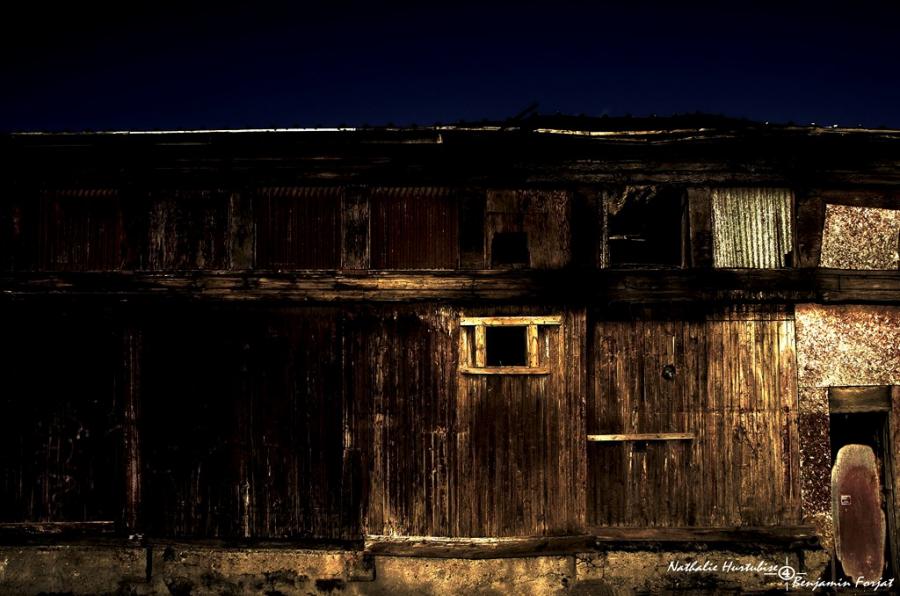
This modest wooden building has been classified by the City of Montreal, in 2007, as «a building with interesting heritage». It is obviously far from the buildings of heritage and architectural interest, exceptional value and large institutional character of the district that must be tightly controlled, as to the construction, renovation and demolition such as the Olympic Stadium, the Maisonneuve Market, the Letourneux fire station and many churches.
This is not so much its architectural quality that gives value to the CPR Freight Office rather than the period of great industrial deployment of Montreal to which it refers and the vital role played by the railways in the economy.
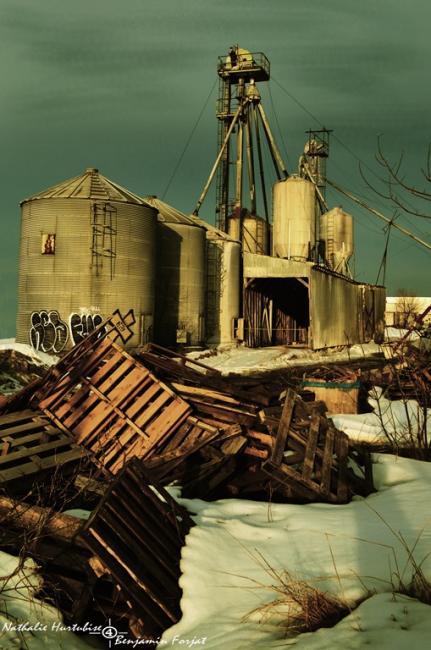
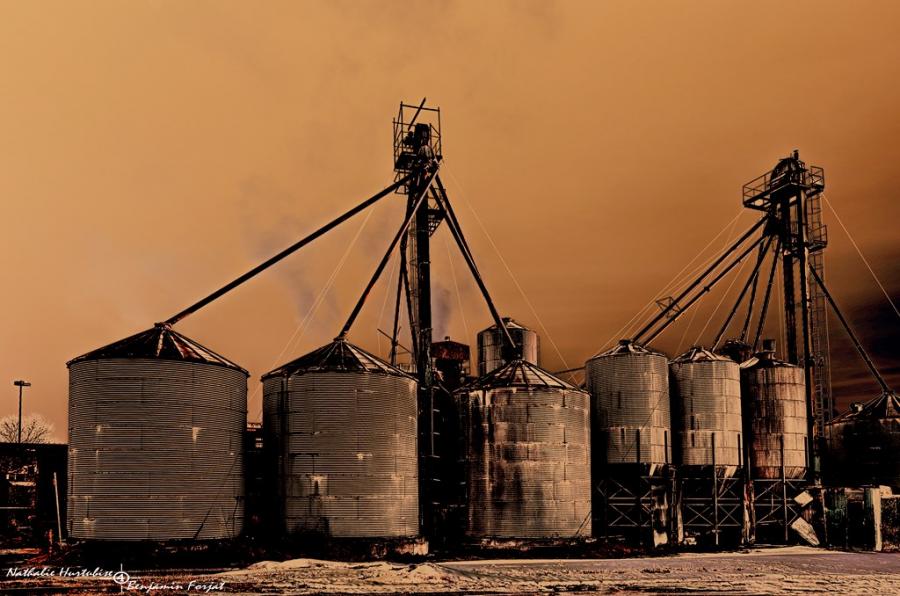
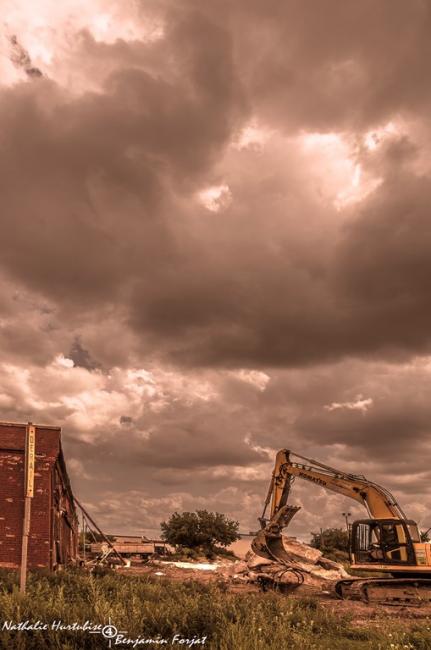
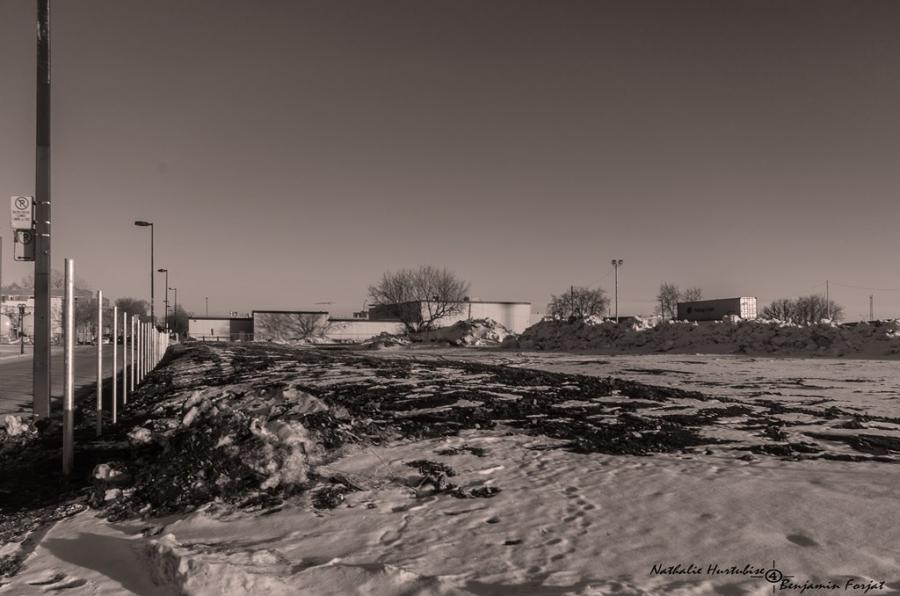
Nevertheless, in 2013, the last occupant, a food wholesaler for livestock farm, pack up and silos were demolished. Early 2014, it was the turn of the CPR Freight Office to go under the wrecker's ball and there remains today no trace of this piece of history in the area.

Photo gallery
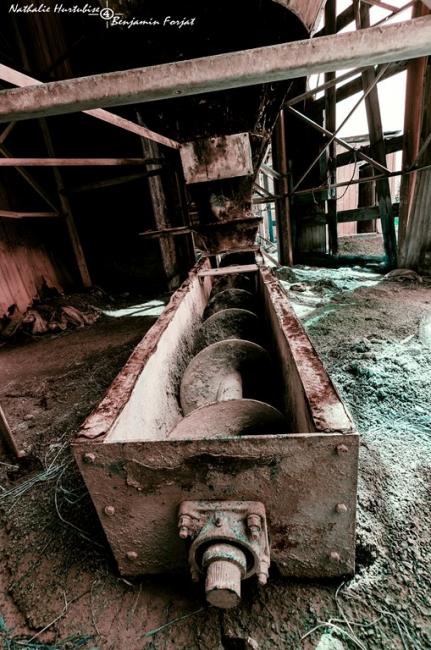
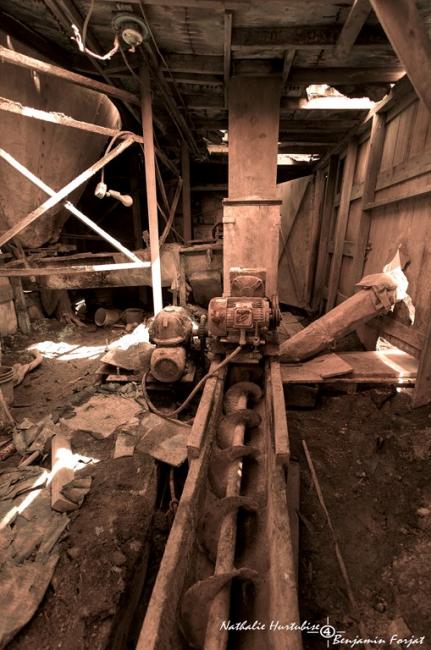
Interested by this place? Here are more pictures of CPR Freight Office.





Urbex Playground
needs you !
You have information about this place? Better still, you have pictures of this place that you are willing to share? Well, hurry to click this button before I came to kick your ass!
Related content
Montréal, Quebec (Canada)
Although this building was built around 1861, the history of the Dow brewery began nearly 60 years earlier, in 1790, when a farmer named Thomas Dunn started in the beer industry in La Prairie, who was an important stopover for travelers who went...
Saint-Hubert, Quebec (Canada)
Dismantled in 1995 by the federal government, the former military base of Saint-Hubert is located close to the airport of the same name. In 1928, the Ministry of National Defence inaugurated the airport to connect by the sky Canada to the United...

For the region, it is a vestige of an industrial era that is now over. Whereas in the past, the factory gave a salary to nearly a hundred employees, the complex is now padlocked and deserted, although monitored by about twenty surveillance...


About Urbex playground
First of all, Urbex Playground is about urban and rural photography lovers. It is the respect of the places we have visited and to whom we have a great admiration. Of its contents, Urbex Playground wishes to preserve the memory of these abandoned, destroyed or dilapidated places who have made the glory of our fathers and which today we have, alas, not enough compassion.
We are not vandals or people necessarily involved in the preservation of these places. We do not pretend to believe that our pictures will change anything in the future of these churches, factories, homes and other abandoned buildings. We're just passionate about the image in the perpetual quest for new photographic challenges.
Urbex Playground is not a photo club, any more than we are touristic guides for these forbidden places. Moreover, in any case, Urbex Playground do not invites you to visit these places without the consent of its owners. These places are dangerous and by entering into these places, legal actions can be taken against you.
However, if you have pictures or information about any abandoned places, do not hesitate to contact us. We will be glad to publish them on the site, including your credit with your name and your website. Like this, our visitors will be able to visite your own website. Do not hesitate to contact us if you have any questions.
Urbex playground is social
Follow us on the following social network. Make sure also to visit these amazing websites by some of our members.
© 2018 Urbex Playground is a creation of Jarold & go. All rights reserved.