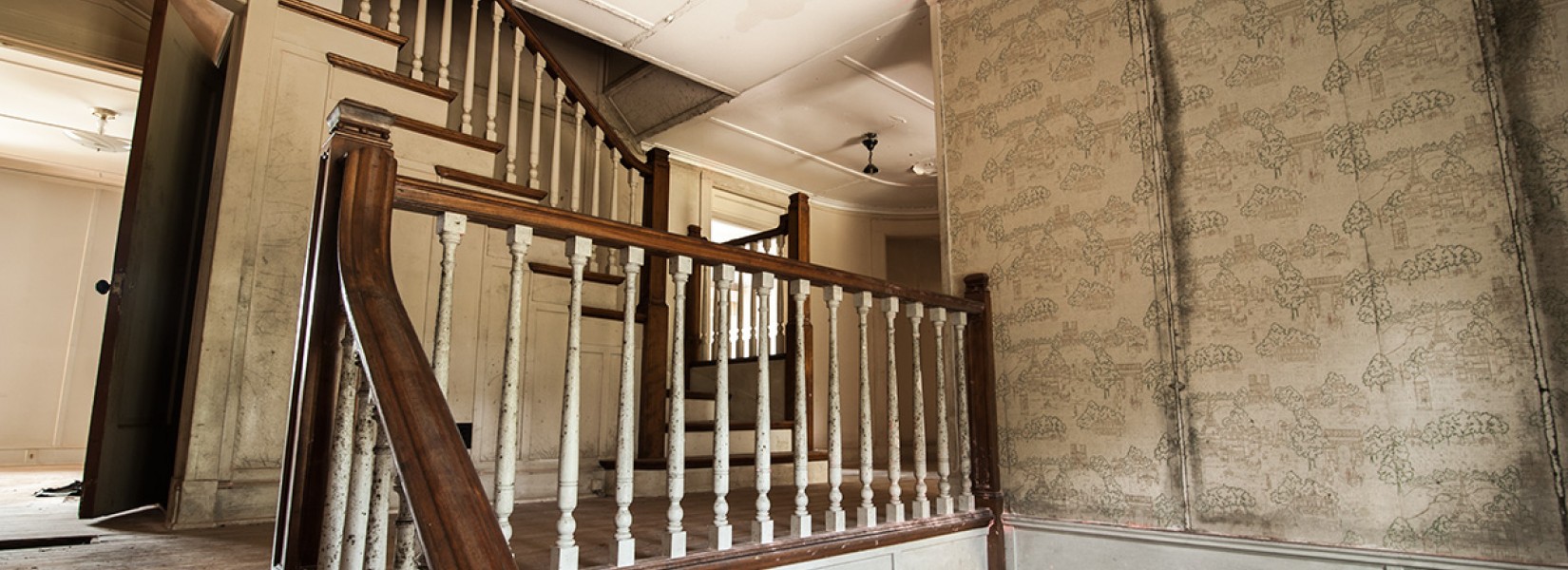
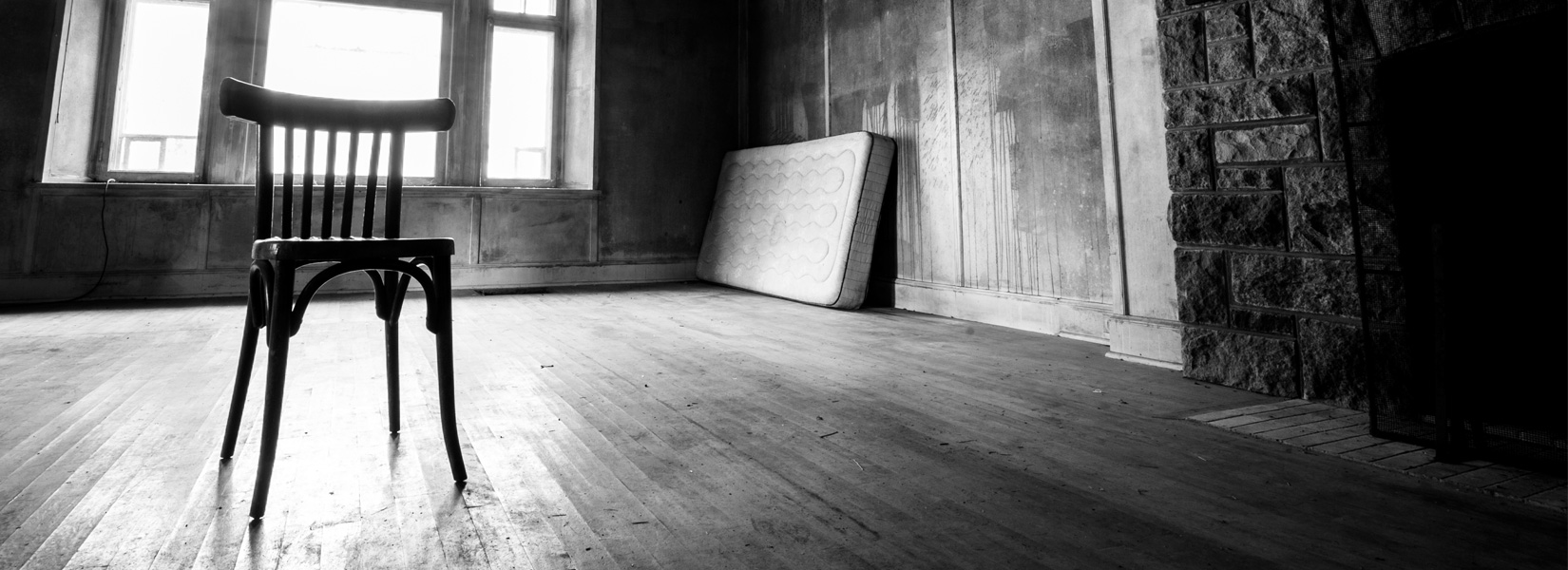
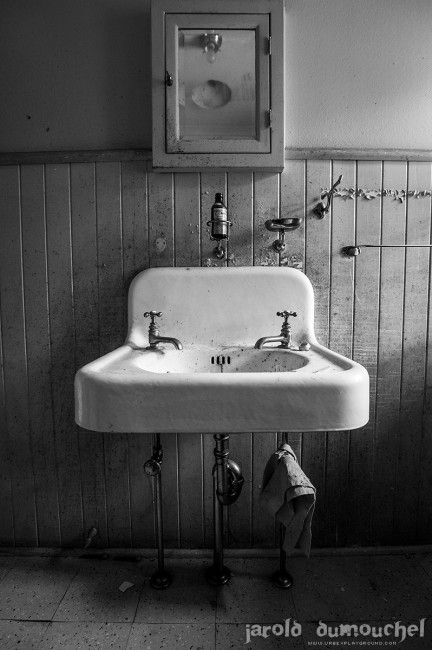
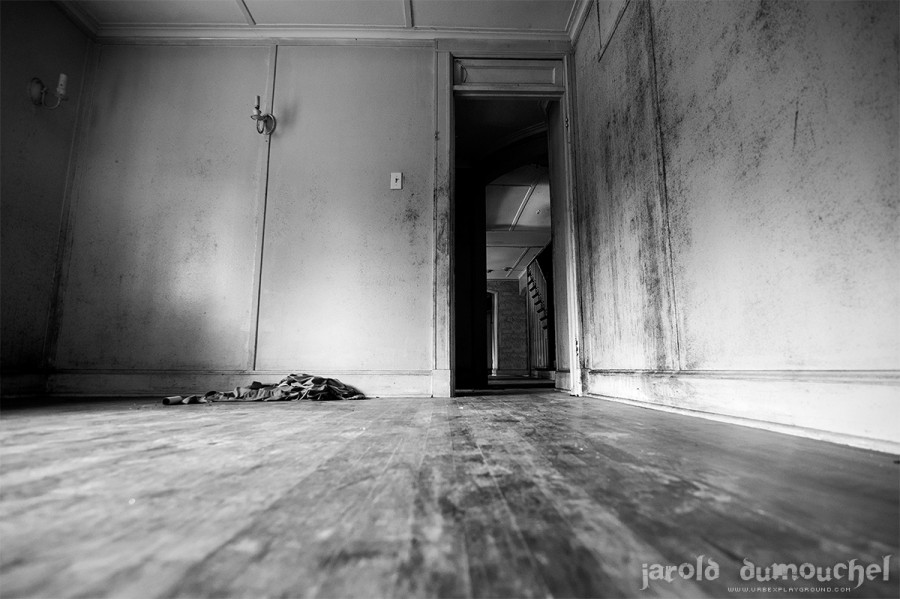
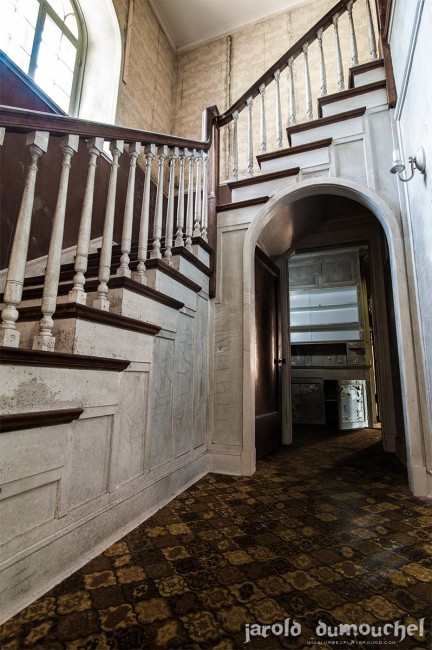
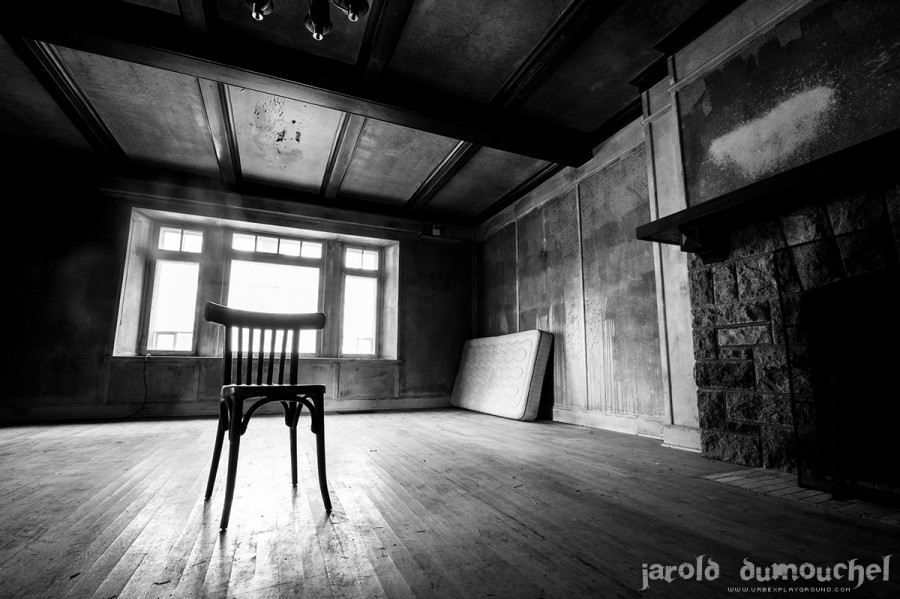
Don't even try to find this house, you won't find it. In fact, if I know that place, it's primarily because I know the owner. From the outside, nothing seems abandoned. Despite the venerable age of the house, no clue suggest that the place is no...

Urban and rural photographic exploration
The Ogilvie widow's abandoned mansion
Bourgeois mansion in the woods
Laurentides (Quebec), Canada
Built in 1923 by Helen Johnston, widow of William Watson Ogilvie, the mansion incorporates all the components required by the old bourgeoisie. It must be said that her husband William W. Ogilvie had made a fortune in the grain trade, and when he died in 1900 he left behind a nice nest egg of nearly a million and a half dollars to his wife and four children.
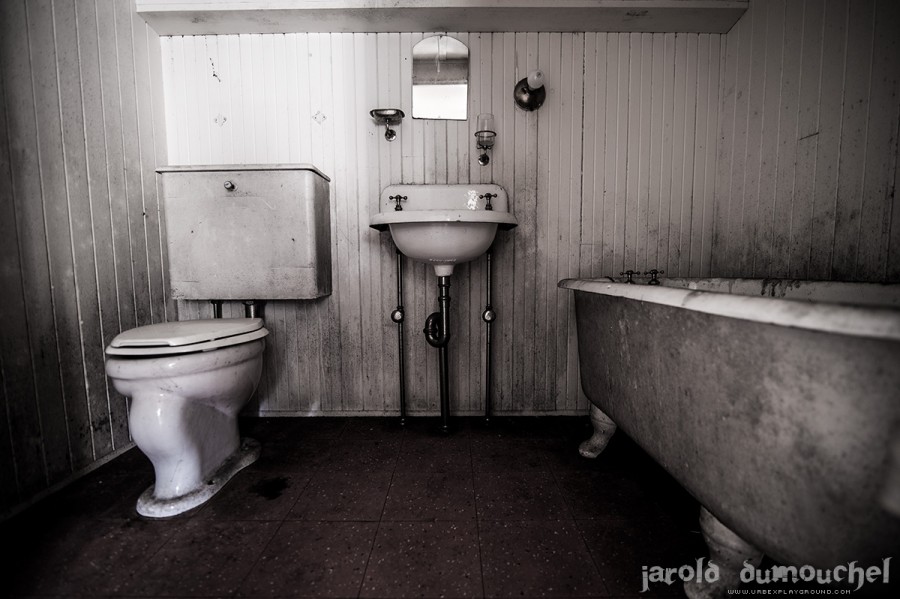
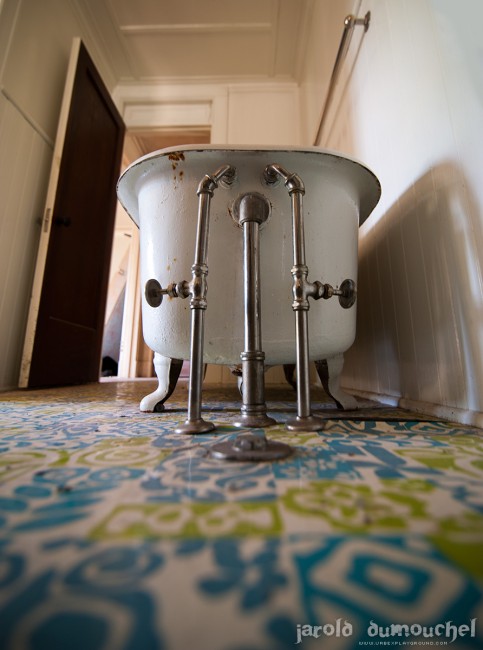
The Ogilvie family already owned a sumptuous residence in Montreal (the Rosemount house located on Mount Royal) but it was common practice at the time to own several country homes. So despite her advanced age, Helen Johnston built this luxury home north of Montreal in the woods, near a lake. Inside, there were half a dozen rooms each with a private bathroom, a large living room on the ground floor, and a small room for the maid right next to the kitchen. Outside, there were farm buildings (now destroyed) and much more.
With the death of the Ogilvie widow, the property was sold and eventually became part of a vast tourist complex comprising a private golf course, chalets and more.
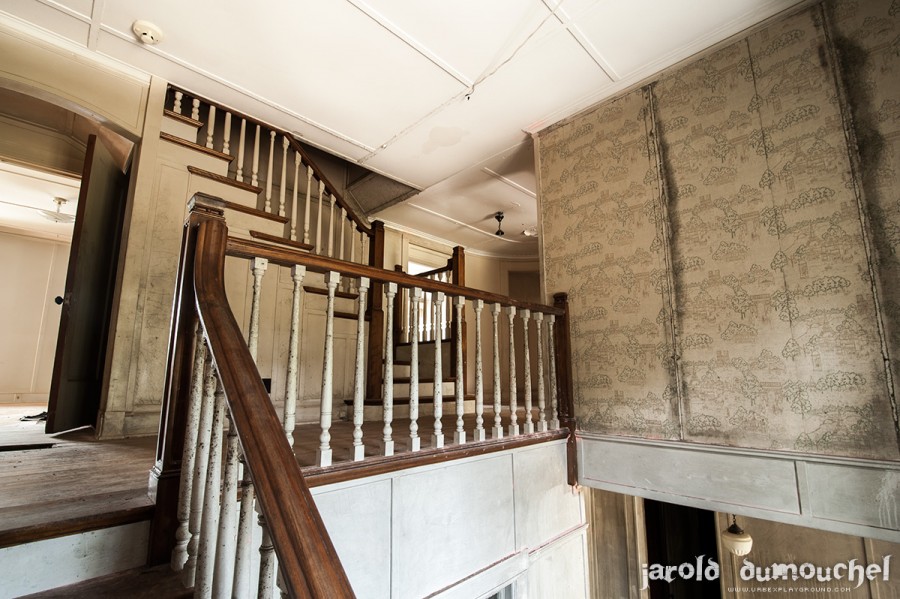
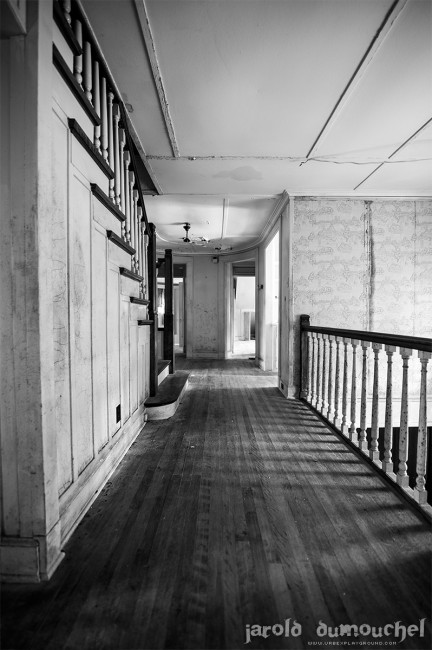
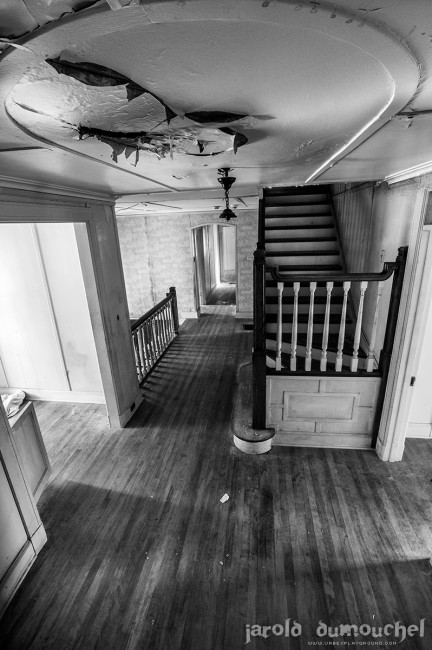
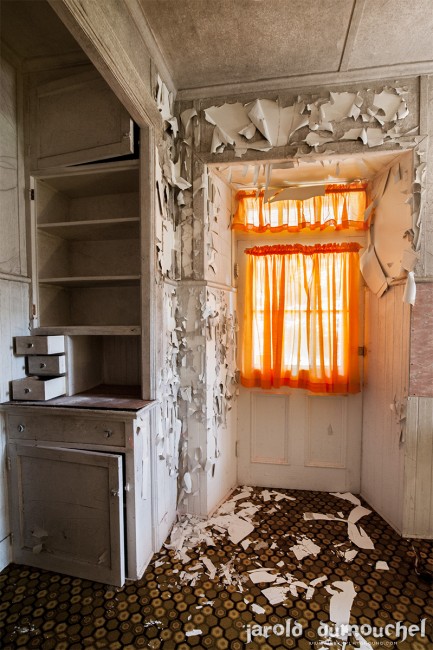
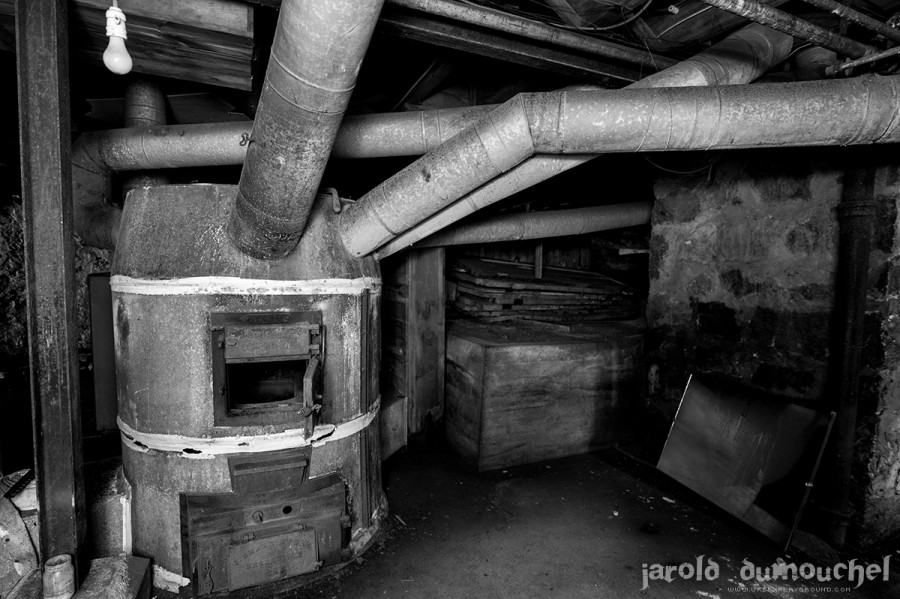
Today, it's the whole complex who is in a sorry state. The golf course is closed, the company's web site has not been updated for two years, and the mansion is abandoned, left to itself. Although its structure is in excellent condition, mold has begun to appear everywhere. Fortunately, so far there hasn’t been any vandalism.

Photo gallery
Interested by this place? Here are more pictures of the Ogilvie widow's abandoned mansion.
Urbex Playground
needs you !
You have information about this place? Better still, you have pictures of this place that you are willing to share? Well, hurry to click this button before I came to kick your ass!
Related content
Charleston, Nova Scotia (Canada)
Built in the woods near the hamlet of Mill Village, the Teleglobe station is no longer the shadow of what it once was. Built in 1964 at a cost of $ 9 million, the vast complex was part of an extensive satellite program for the transmission of...
Beauce, Quebec (Canada)
Abandoned for more modern constructions or left behind to adrift once the occupants died, abandoned houses populate the countryside. Hidden under vegetation who tries to conquer its old territory, sometimes the time prevents explorers from...
Montréal, Quebec (Canada)
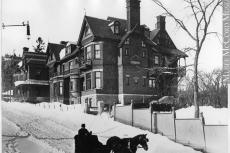
Partially destroyed in 1986 (nearly 40% was razed) and now totally neglected, the Redpath Mansion was designed by architect Sir Andrew Taylor and built for Francis Robert Redpath, a member of the rich family who worked on the construction of the...


About Urbex playground
First of all, Urbex Playground is about urban and rural photography lovers. It is the respect of the places we have visited and to whom we have a great admiration. Of its contents, Urbex Playground wishes to preserve the memory of these abandoned, destroyed or dilapidated places who have made the glory of our fathers and which today we have, alas, not enough compassion.
We are not vandals or people necessarily involved in the preservation of these places. We do not pretend to believe that our pictures will change anything in the future of these churches, factories, homes and other abandoned buildings. We're just passionate about the image in the perpetual quest for new photographic challenges.
Urbex Playground is not a photo club, any more than we are touristic guides for these forbidden places. Moreover, in any case, Urbex Playground do not invites you to visit these places without the consent of its owners. These places are dangerous and by entering into these places, legal actions can be taken against you.
However, if you have pictures or information about any abandoned places, do not hesitate to contact us. We will be glad to publish them on the site, including your credit with your name and your website. Like this, our visitors will be able to visite your own website. Do not hesitate to contact us if you have any questions.
Urbex playground is social
Follow us on the following social network. Make sure also to visit these amazing websites by some of our members.
© 2018 Urbex Playground is a creation of Jarold & go. All rights reserved.